


ArchKRiver Project: Completion of the 2026 Fieldwork Season
Published on: November 12, 2026In early November, we completed this year's fieldwork within the project The Archaeological Landscape of the Kolpa River Basin in the Late Bronze and Iron Ages (ArchKRiver), led by Lucija Grahek PhD at the ZRC SAZU Institute of Archaeology. The fieldwork concluded with the excavation of a small test trench in a prehistoric burial mound at Griblje.
In collaboration with Dr Bryan Hanks, Alex Duley and Katie Sonnett from the University of Pittsburgh (USA), we first conducted non-invasive geophysical surveys at four archaeological sites: the presumed Iron Age cemetery at Stražni dol near Vinica, the flat cemetery at Kuretova njiva near Grm pri Podzemlju, the prehistoric burial mound at Griblje, and the area east of the previously excavated cemetery at Pezdirčeva njiva in Podzemelj, where we investigated whether the cemetery extended onto the higher terrace to the east.
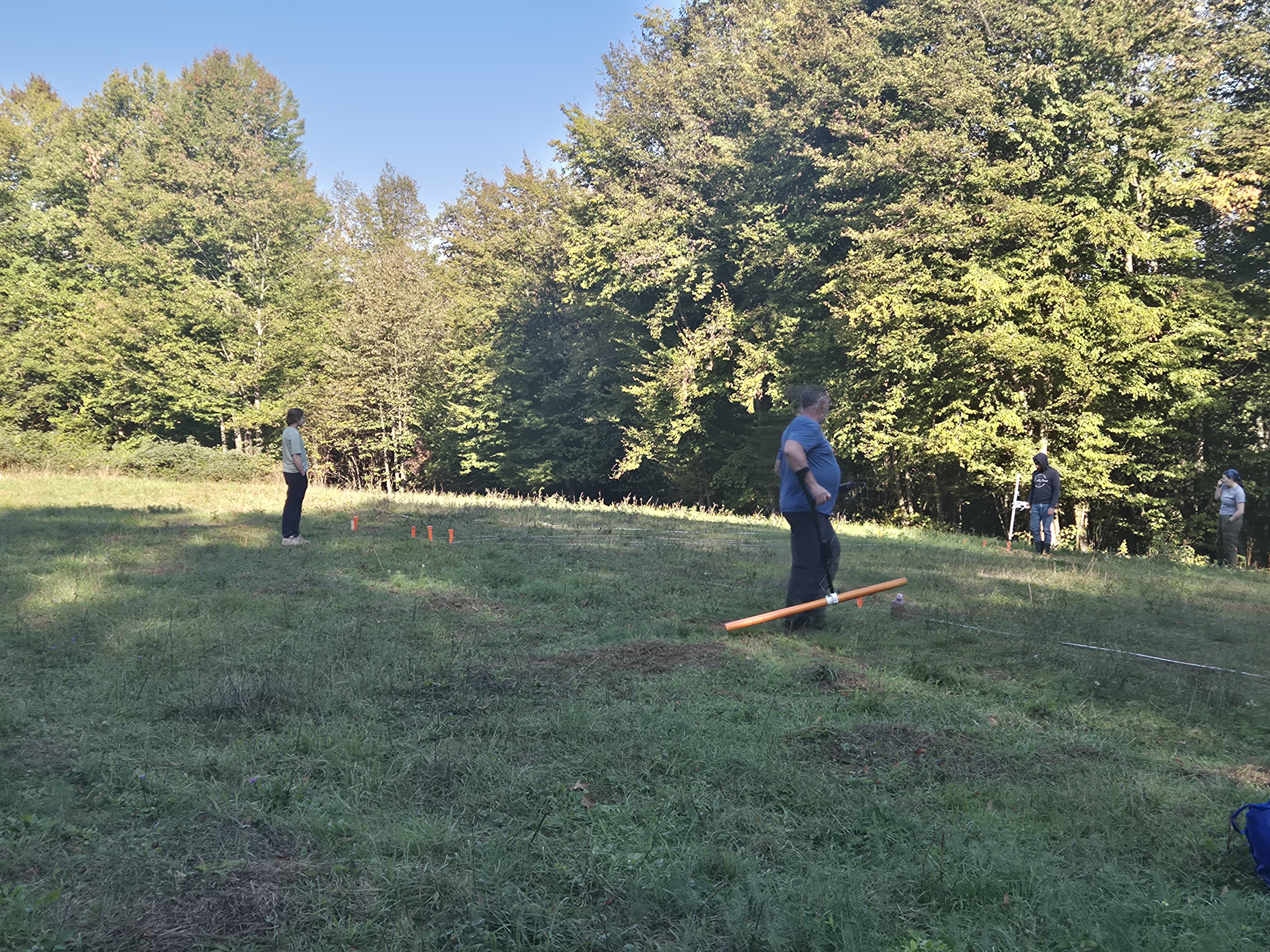
Image: Stražni dol, geophysical survey
Based on the geophysical survey results, we subsequently excavated small test pits and trenches at the first three sites in collaboration with the team from Arheoterra d. o. o. These investigations allowed us to determine the origin of the detected anomalies and collect samples for further scientific and geoarchaeological analyses.
At Stražni dol, we uncovered clear traces of excavations carried out by the Duchess of Mecklenburg in the early 20th century, thereby confirming the location of the Iron Age cemetery on the plot of land already identified by Janez Dular in his Arheološka topografija Bele krajine [Archaeological Topography of Bela Krajina] (1985). Most of the cemetery appears to have been situated in a nearby forest clearing, which was not included in the current investigations.
At Kuretova njiva, we encountered poorly preserved remains of cremation graves that had been severely disturbed by ploughing, leaving mainly charcoal remains.
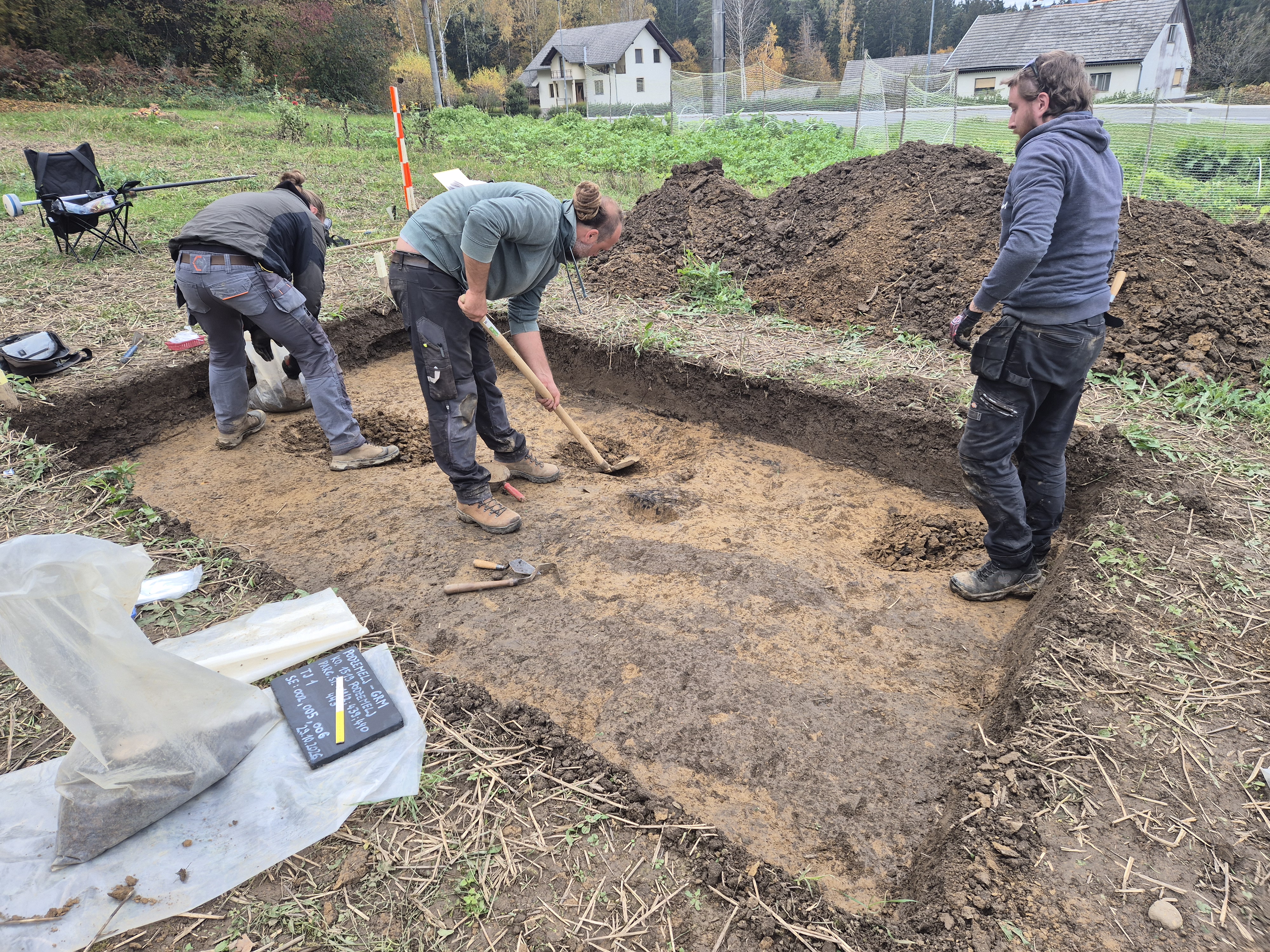
Image: Kuretova njiva, excavation of the surviving grave-pit fills
At Griblje, we also discovered remains of a Bronze Age occupation surface within the burial mound. This finding, together with further geoarchaeological analyses, may help us better understand the construction of the mound and its relationship to the nearby Bronze Age settlement.
Although this year's test excavations were limited in scope, they yielded important new data which, together with the results of the planned analyses, will contribute to a better understanding of prehistoric settlement patterns and funerary practices in Bela Krajina during the Late Bronze and Iron Ages.
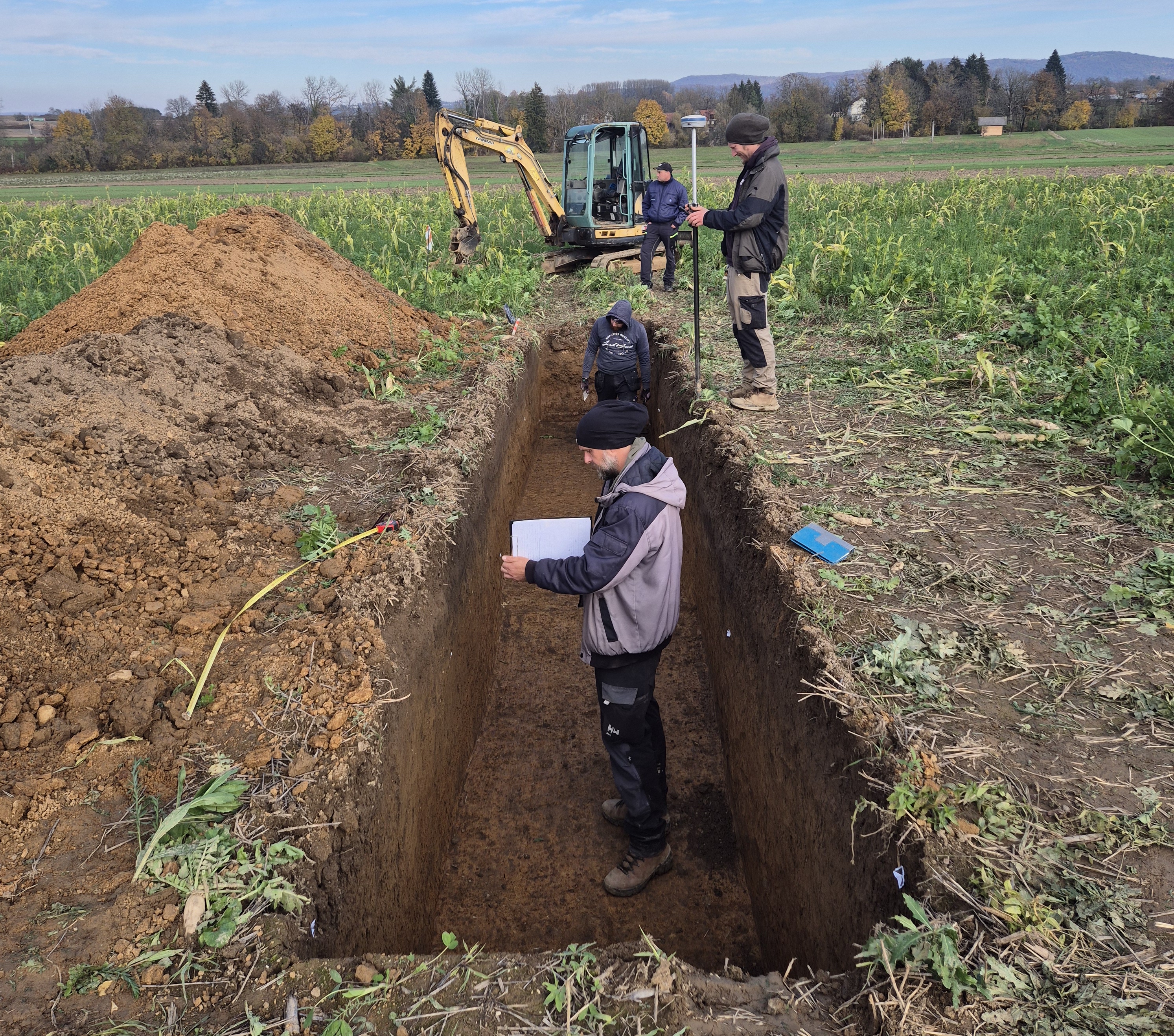
Image: Griblje, documentation of the excavated test trench
The investigations were carried out within the bilateral research project ArchKRiver (N6-0443), funded by the Slovenian Research and Innovation Agency (ARIS).