Extreme Earth. A holistic approach to the Earth surface processes driven by extreme weather events
Principal Investigator at ZRC SAZU
Maja Andrič, PhD, Asst. prof.-
Original Title
Extreme Earth
-
Acronym
ExtremEarth
Project Team
Tilen Podobnik, Drago Valoh-
ARIS Project ID
J7-60124 (C)
-
Duration
1 January 2025–31 December 2027 -
Link to SICRIS
22754 -
Lead Partner
-
Project Leader
-
Financial Source
Javna agencija za znanstvenoraziskovalnoin inovacijsko dejavnost RS

Project's home page with the leading partner >>
The following partners are participating in the project: Geological Survey of Slovenia (lead partner), ZRC SAZU (institute of Archaeology), Civil Engineering Institute of Slovenia, and University of Ljubljana (Faculty of Biotechnology, Faculty of Civil Engineering and Geodesy, Faculty of Arts and Faculty of Natural Sciences and Engineering).
Project objectives
The main objective of the Extreme Earth project is to study how extreme weather events affect processes on the Earth's surface, from the geological past to the present. The project will pay special attention to:
- changes on the Earth's surface caused by climatic and tectonic factors, with an emphasis on the effects of extreme weather events in recent geological and written history
- understanding the dynamics of sedimentation processes on alluvial fans and floodplains
- mass movements and landslides caused by extreme precipitation, and research into triggering and preparatory factors
- redistribution of pollutants and changes in their properties under the influence of extreme weather events, and remediation of contaminated geological materials
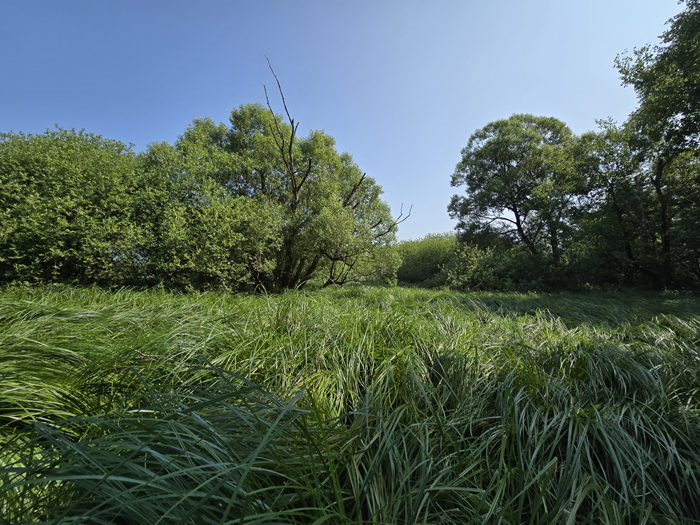
Dravsko polje (photo: M. Andrič)
Researchers from the Institute of Archaeology of the Slovenian Academy of Sciences and Arts are participating in work package 2: Geological framework and extreme weather events in the past (N2.5 Influence of vegetation on geological processes during extreme weather events). Our task in the project is to conduct palynological research and study the development of vegetation over a longer time period (Late glacial/Holocene) in order to address the question of how vegetation/humans influence the frequency, strength and visibility of extreme events? We are interested in how extreme events are reflected and how frequent they are in natural, forested landscapes on the one hand, and in open landscapes where vegetation has already been strongly influenced by humans on the other?
We will study the development of vegetation at selected locations on Dravsko polje (Rački ribniki, Drava oxbow lakes near Starše and Zlatoličje), which we will compare with the results of geological research in order to better understand the connection between vegetation, human impact, and the frequency and intensity of flood events.